Having finished Alan Watts’ wonderful chapter on Zen and the arts in The Way of Zen, I wanted to share a couple of other thoughts.
We’ve talked here before about the need to develop technique to the point of mastery so that you can then abandon, or go beyond, that technique. Watts says,
“The brush must draw by itself. This cannot happen if one does not practice constantly.
But neither can it happen if one makes an effort. Similarly, in swordsmanship one must
not decide upon a certain thrust and then attempt to make it, since by that time it will
be too late. Decision and action must be simultaneous.”
In order to reach a deeper level mastery in any aspect of our lives, it is essential that we get past the mind. It is just so with making art. The freshest, most exciting art we make is when we are not aware consciously of what we are doing. If we have practiced our craft enough, to the point where it has become second nature to us, the mind can let go of trying to control things and then other dimensions of our being can emerge to guide our efforts. Herein lies the true fountainhead of creativity.
Practice is one path to overcoming the mind. My youngest son is learning to drive at the moment. It’s an interesting process. At first, it is fiercely mental – you try to keep aware of every little detail of driving. Paying attention to every road sign, checking the mirrors and blind spots, your speedometer, the other drivers, etc. It is a real struggle to mentally manage all these details at once. At some point, however, you’ve done it enough that it becomes less of a conscious activity and you can relax – you become a better driver because the mind has moved aside.
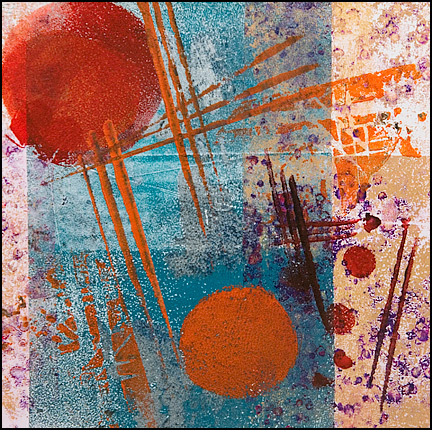
When I am painting, I am usually happiest with my work only when I suddenly become self-conscious again and stop to consider what I’ve done – if I’ve been self-conscious all along, it’s usually become a muddle.
When the brush draws by itself, good things happen…


 Study Journal:
Leave a comment